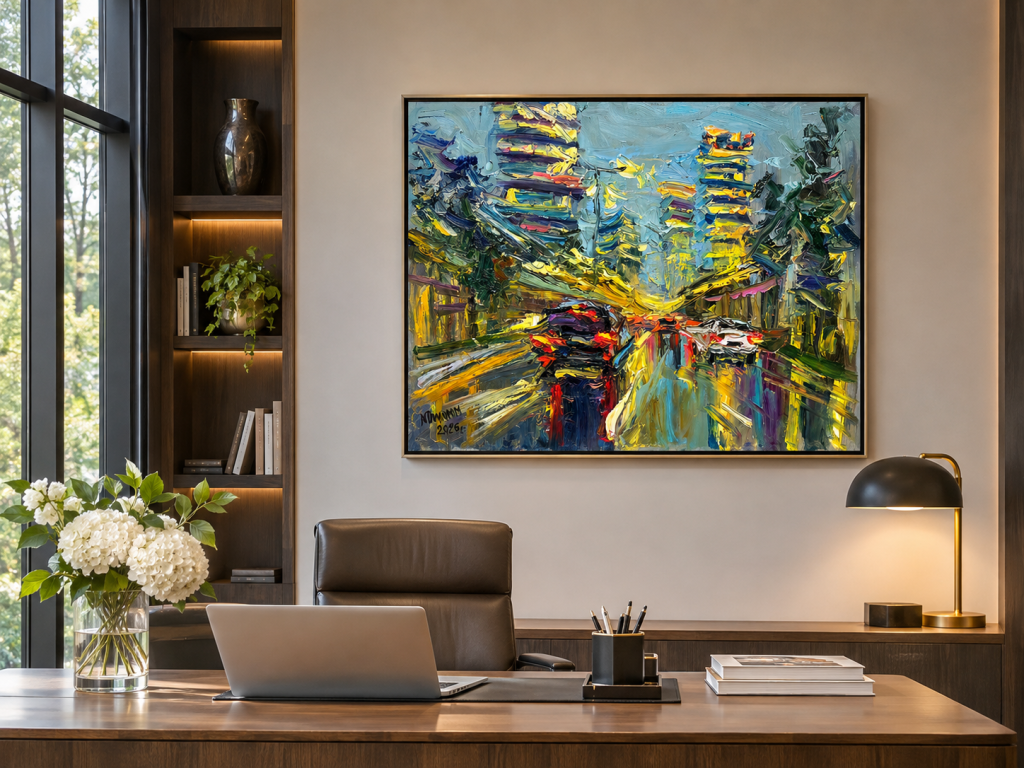
Choosing original art for offices starts with understanding the space, the people who use it and the role the artwork will play. A painting might become a point of recognition in a reception area, introduce a personal perspective into a private office or connect several rooms through a shared artistic language.
There is no single style that belongs in a workplace. Contemporary painting, sculpture, mosaic and mixed-media works offer different possibilities. A useful selection considers artistic interest alongside scale, material, viewing conditions and the practical requirements of the project.
Start with the Purpose of the Selection
Before comparing individual works, establish what you are choosing for. Is it one painting for a finished room, a focal work for a new office or a group of pieces for several spaces? These are different decisions, and each benefits from a clear brief.
For a private office, the owner’s interests may lead the selection. In a shared workplace, the conversation may include several people, the architecture and the organisation’s identity. A reception area also introduces the company to visitors, so the work may be considered as part of that first encounter.
This does not require a literal illustration of the business. An artwork can relate to a place through its subject, cultural context or materials. It can also be chosen because it introduces an unexpected perspective that the people using the space value.
Look Beyond Colour Matching
Colour can help establish a relationship between an artwork and its surroundings, but it is only one part of the choice. Composition, subject and surface can sustain interest long after the initial visual impression.
A cityscape may appeal through its observation of everyday movement. A landscape may hold a connection to a place or memory. An abstract work can invite attention to rhythm and form, while a mosaic or mixed-media object may draw interest through the interaction of its materials.
Rather than applying a fixed rule about which subjects suit offices, consider what makes a particular work worth returning to. Learning about the artist and seeing related pieces can help clarify that response.
Consider Scale and Viewing Distance
Dimensions tell only part of the story. The same painting will be experienced differently across a reception area, beside a desk or along a corridor. Consider the distance from which it will first be seen and whether people will have an opportunity to approach it.
A broad horizontal composition may establish a relationship with a long wall, while a smaller work can reward close attention in a more intimate setting. Neither format is automatically more significant: the relationship between the artwork and the space matters.
For example, Dilorom Mamedova’s Pulse of the City measures 80 × 100 cm, while Neon Symphony measures 90 × 190 cm. Both explore urban life, yet their proportions create different visual experiences. Comparing them at their actual dimensions is more useful than comparing equally sized images on a screen.
A scale visualisation can support this assessment when based on reliable measurements of the wall and furniture. It should be considered alongside clear photographs of the original work, including close views of its surface.
Pay Attention to Materials and Light
An original artwork is a physical object. Raised paint, stone, wood and layered materials interact with light in ways that a frontal photograph may only partly convey.
Ask for detail photographs and, where available, a short video showing the work from different angles. For sculpture and freestanding objects, views of the sides, back and base are particularly helpful. Dimensions, weight and installation requirements should be established before the selection is finalised.
Discuss the proposed location with the gallery, including daylight, nearby heat sources and the lighting planned for the work. Care and display requirements depend on the materials and construction of the individual piece.
Build Connections Between Works
When selecting several artworks for an office, a connection between them can give the group coherence. That connection might be a shared artist, a subject, a material or a conversation between different approaches.
An artist’s series offers one starting point. In Urban Roads, Dilorom Mamedova returns to streets, traffic and changing weather. The subject connects the paintings, while differences in palette, format and handling give each work its own character.
A selection can also bring together several artists. Painting and three-dimensional work may be considered in the same project without asking them to resemble one another. Each piece should have a reason to be included and enough space to be appreciated individually.
Review the Practical Details Before Purchasing
Once a shortlist has emerged, confirm the information needed to make the purchase. This includes the artist, title, materials, dimensions, condition, price and current availability, together with any framing or installation details.
The project budget should account for more than the artwork price. Ask which costs are included and which require a separate quotation, such as packing, delivery, framing and installation. For an international purchase, clarify the delivery arrangements and any destination charges before committing.
If several people approve the purchase, a concise shortlist with consistent information can make the discussion easier. Use the same fields for every work and distinguish confirmed details from questions still awaiting an answer.
Explore the Art Before Making the Final Choice
The most useful shortlist combines practical suitability with a clear interest in the works themselves. Spend time with the images, look at details and learn about the artists. A piece that initially attracts attention through colour may become more compelling through its subject, process or relationship to a wider series.
Valenty Art Gallery presents original paintings and art objects, with a focus on contemporary art from Central Asia alongside other selected artists. Explore our artist series, discover the people behind the work through our artist profiles, or browse the available artworks.
For an office project enquiry, share the works that interest you, your location, approximate budget and timeline. Photographs and dimensions of the intended space can provide a useful starting point for discussing the selection.